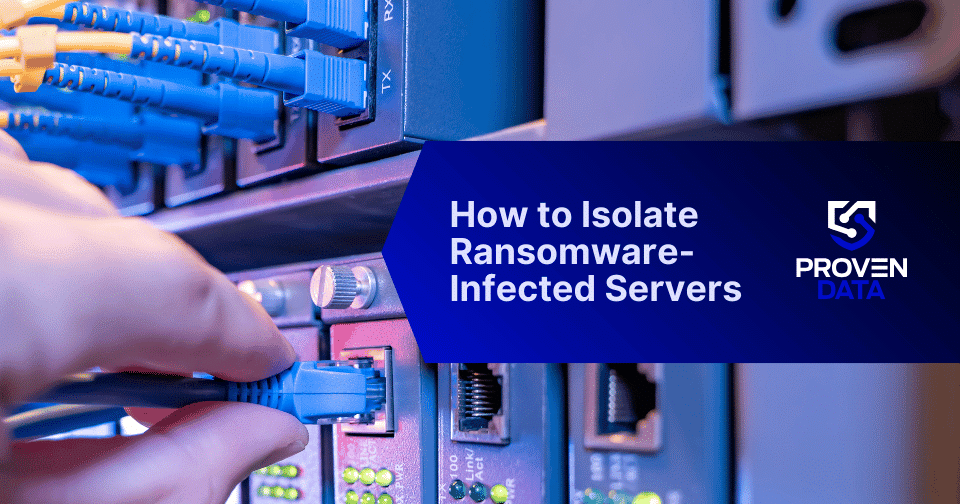
How to Isolate Ransomware-Infected Servers

Ransomware attacks can severely damage businesses and organizations. In some cases, they can even lead to bankruptcy, making it crucial to respond swiftly and effectively. Isolating infected servers is critical in mitigating the damage and preventing further spread within the network.
The mechanical process of Isolating Infected Servers is the single most important action in incident containment. Once the threat is confined, the focus shifts to technical recovery, where the next crucial step is determining how to decrypt ransomware files, an action that requires both forensic knowledge and specific decryption keys.
In this article, we outline the necessary steps to isolate infected servers and safeguard your organization.
What is ransomware
Ransomware is a type of malware that encrypts files on a victim’s system and demands a ransom for decryption. It can be spread through various vectors, including phishing emails, unsecured Remote Desktop Protocol (RDP), and exploiting system vulnerabilities.
Solutions to isolate infected servers
When dealing with a ransomware infection, it’s crucial to implement effective containment strategies to prevent the ransomware from moving laterally and infecting other systems on the network, minimizing damage.
This can be done either physically by disconnecting the server from the network or logically by creating a separate VLAN or firewall rules to restrict access to the infected system.
In addition to isolating the infected server, it’s also important to quarantine any infected snapshots or backups of the system. Quarantine is an essential cybersecurity measure that isolates infected files or systems to prevent the spread of malware, particularly during ransomware attacks. When antivirus or anti-malware software detects a potential threat, it moves the infected files or snapshots to a secure location where they cannot execute or interact with the rest of the system. This isolation allows IT teams to analyze the quarantined items without risking further contamination.
Steps to isolate infected servers after a ransomware attack
When ransomware is detected, immediate action is vital. Follow these steps to isolate infected servers:
1. Disconnect from the network
Immediately disconnect the infected server from the network. This action prevents the ransomware from spreading to other connected devices.
2. Validate the infection
To validate the infection, organizations should utilize antivirus outputs, intrusion prevention systems, and Security Information and Event Management (SIEM) tools to confirm the presence of ransomware. This verification process is crucial for understanding the scope of the attack and determining the appropriate response.
In addition to these traditional methods, integrating advanced tools like a ransomware ID tool can enhance the validation process by providing detailed insights into the infected systems and identifying potential vulnerabilities.
Furthermore, employing digital forensics services allows for a thorough investigation of the incident, helping to uncover attackers’ methods and any lingering threats.
Together, these tools facilitate a comprehensive assessment of the infection, enabling organizations to respond effectively and mitigate further risks.
3. Reset compromised credentials
Change passwords for all accounts and apply multifactor authentication (MFA) to protect them and ensure no one can use these accounts to further infect or steal data from the servers and network.
4. Use malware-free backups for restoration
After isolating the infected server, the next step is to restore the affected systems using secure, malware-free backups. It’s essential to ensure that the backups used for restoration are not connected to the network during the process to prevent re-infection. Regularly testing the integrity and recoverability of backups is crucial to ensure they can be relied upon in an incident.
5. Monitor for signs of compromise
Even after cleaning up the infected server and restoring it from backups, it’s important to monitor the system continuously for any remaining signs of compromise. This vigilance helps identify any residual threats that may still be present on the system, such as backdoors or other malware that could enable the attackers to regain access.
Monitoring can be done through various means, such as log analysis, network traffic monitoring, and endpoint detection and response (EDR) solutions.
Written by
Cybersecurity writer at Proven Data covering ransomware trends, incident response, and data protection best practices.